
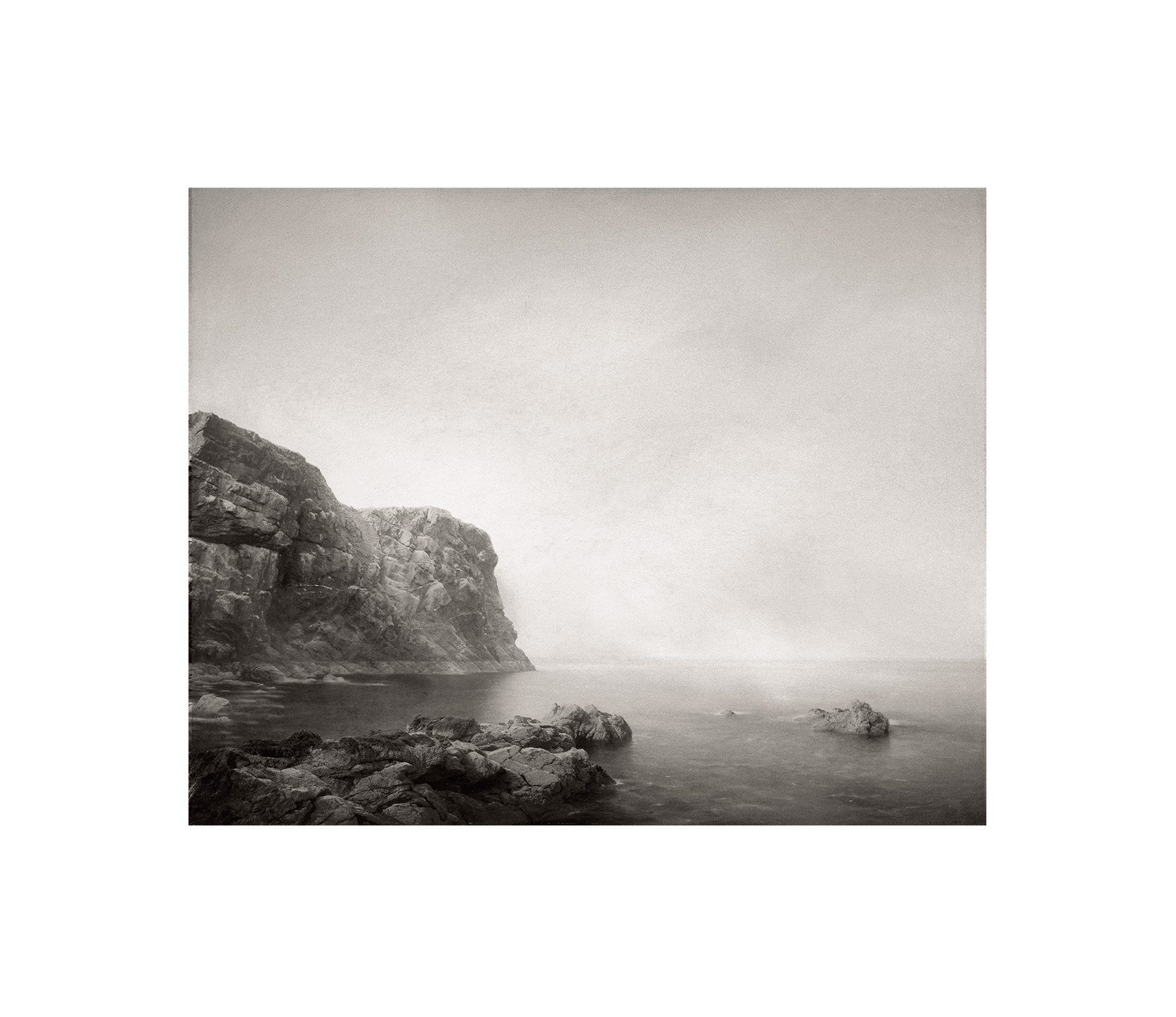
Cathedral of the Tides
Some places keep a slower time than ours.
On a wild edge of the Scottish coast, stone remembers what we forget, and the tide moves to a rhythm older than memory. Cathedral of the Tides is a body of monochrome photography and reflective prose made in that slower time – an invitation to attend to what endures and what dissolves, and to the quiet kinship you may feel rising as you look.
There is nothing to hurry towards here. Move slowly. Let image and word hold one another.
A cathedral made of weather
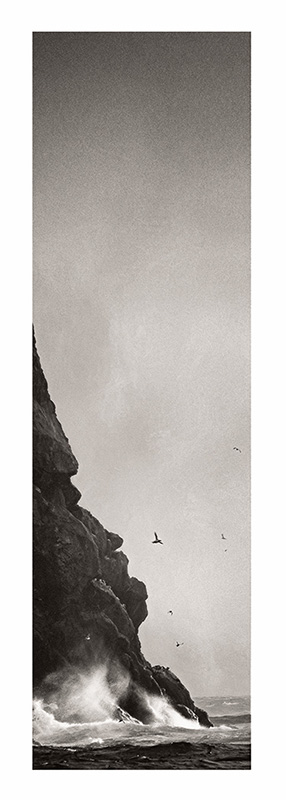
At St Abb’s Head, ancient volcanic cliffs rise from the North Sea like sentinels of time. Standing on those precipices before dawn, you feel part of something far larger than yourself — the raw vitality of the earth, patient and unconcerned. It was that feeling, more than any single view, that began this work.
The title is not decoration. The headland reads as a cathedral: a place where natural forces convene in a timeless, sacred dialogue. Waves collide with rock and shatter into briny mist. Light shifts across the basalt. Gannets glide above narrow ledges crowded with kittiwakes and razorbills. The work does not try to explain any of this. It simply attends.
Cathedral of the Tides continues the enquiry begun in The Spirit of Birds, drawing deeper into the same threads: impermanence, resilience, and the quiet interconnectedness of people and the natural world.
The place, and what it holds
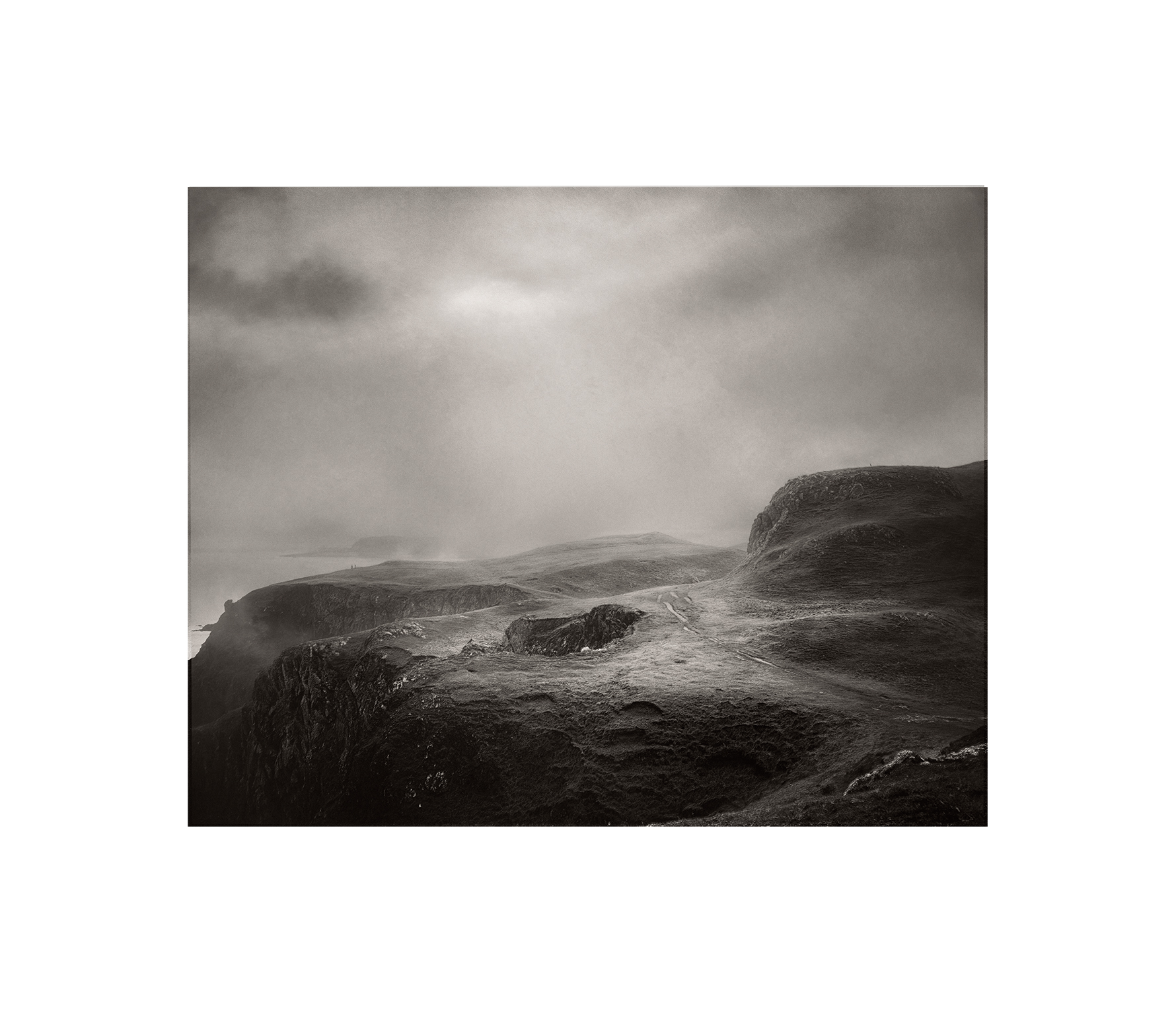
St Abb’s Head sits on the south-eastern coast of Scotland, in Berwickshire – a promontory of weathered stone shaped over millennia by wind and water. It is a landscape that rewards return, and it gives up its meaning slowly.
Certain details recur across the work, each one a mirror for an inner state. The fault line at White Heugh. The rusting iron hooks at Pettico Wick, streaked with amber and burnt sienna. A dark, grounded rook set against a light, soaring kittiwake – the pull to remain and the longing to fly free, held in a single frame.
For those who wish to go further, the headland carries its own long memory. St Æbbe, a seventh-century abbess, built a monastery on these cliffs; her ruins remain as a symbol of endurance and grace within impermanence. Read another way, the geography becomes a map of the psyche – the sea as the restless unconscious, the cliffs as monuments to endurance. These readings are offered, never imposed. The images stand first; the meaning waits for anyone who chooses to look longer.
Image and word, held together
Robert Broughton works in monochrome by choice. Removing colour is an act of deliberate subtraction – with the immediate prettiness stripped away, a landscape gives up its deeper grammar of form, texture, shadow, and light.
Photography and writing are not separate disciplines here but two halves of the same enquiry. In the field, Robert keeps a notebook of raw reflections; later these evolve into the prose that sits alongside the images. The words are placed sparingly, offered not to inform the mind but to open the heart. Image leads. The writing follows, deepening the encounter for those who stay with it.
That balance is the heart of the project. One reflection watches the sea meet the rock and asks whether we are not also shaped by the currents of our lives – the cold waters of loss, the steady tides of love, the unexpected storms of change. Another lingers in sea mist over the White Heugh stacks, asking what truths we have allowed to fade into the half-light. The photographs and the writing complete one another. Neither is a caption for the other.
Made slowly, on purpose
This is not a project that could be rushed. It grew from a long immersion in one place, across the seasons – walking, waiting, and being present before the shutter was ever pressed.
The making resembles erosion more than construction. Robert begins with more than he needs, then wears the work down through iteration until only its essence remains. It is a practice of receptivity rather than capture: letting the headland speak, and trusting that patient attention will reveal what a single visit never could. The result is a body of work made to be lived with, not glanced at – images and words that ask you to slow down, and reward you for doing so.
The release
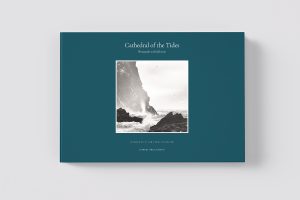
Cathedral of the Tides will be published in
November 2026.
The book will be available in two limited editions:
A limited edition of 6 artist-printed and bound copies | the most intimate expression of the work, produced and finished by hand.
A limited edition of 200 A4 landscape hardback books | the full collection of images and reflective essays, presented in a considered, collectible form.
Both editions are strictly limited. Details of availability and how to enquire will follow closer to publication.
Step through
The work also exists as an immersive virtual exhibition – a portable sanctuary conceived to still the mind and slow the pace, where you can walk among the images at your own tempo and let the place find you.
A threshold waits. The tide is in no hurry, and neither should you be.
If you would like to be among the first to hear when the editions become available, you are warmly invited to join the mailing list for occasional reflections and news of new work – or to enquire whenever you feel ready.